Shanidar Cave
- Kind of place
- Historical
- Best season
- Spring
- Safety level
- Low - generally safe
- Guests
- All guests
- Vehicle
- Normal car
About
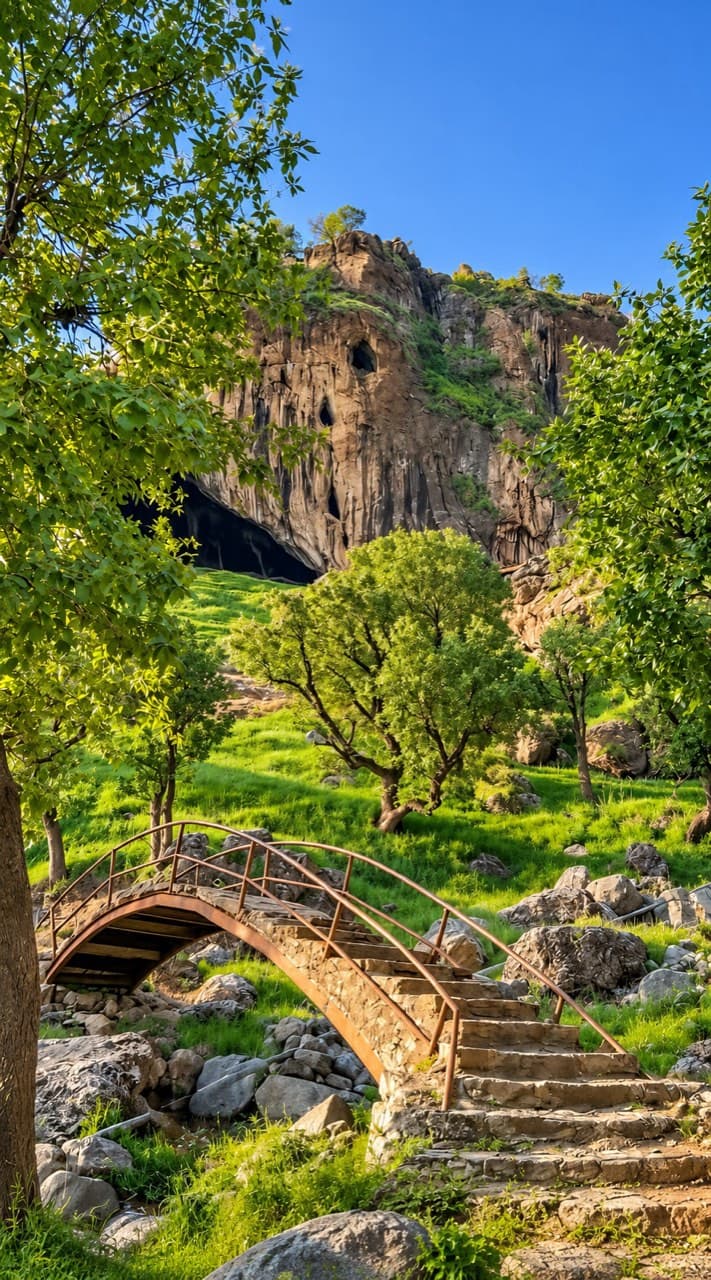
Shanidar Cave is one of the Kurdistan and world’s most important prehistoric and archaeological sites. It is located at the foot of Mount Bradost in Mergasor District, approximately 145 kilometres northeast of Erbil. The cave stands about 822 metres above sea level. Its triangular entrance measures approximately 25 metres wide and eight metres high, while the cave extends around 40 metres into the mountain and reaches a width of nearly 53 metres in some sections. Archaeologist Ralph Solecki and his team excavated the cave between 1951 and 1960. Those excavations and subsequent studies identified the skeletal remains of ten Neanderthal individuals, most dating from approximately 65,000 to 35,000 years ago. One of the best-known discoveries is Shanidar 1, who survived several severe injuries and physical impairments for many years. This has led researchers to suggest that other members of his group may have cared for and supported him. Shanidar 4 became associated with the debated “flower burial” after pollen was found near the remains. Researchers initially suggested that flowers had been intentionally placed with the deceased. More recent studies, however, indicate that bees or burrowing animals may have carried the pollen into the soil. The interpretation therefore remains a subject of scientific debate. New excavations began in 2015, and in 2018 researchers discovered the remains of a Neanderthal woman known as Shanidar Z, who lived approximately 75,000 years ago. Her crushed skull was reconstructed from more than 200 fragments, and a facial reconstruction was revealed in 2024. A later cemetery was also discovered inside the cave, dating back more than 10,000 years and containing the remains of at least 35 people. These discoveries show that Shanidar Cave was used by humans over a long period and make it an important site for understanding the lives, social care, and mortuary practices of ancient human communities.
Good to know
Spring and autumn are suitable times to visit Shanidar Cave. The road to the area is mountainous, and snow and ice can make travel difficult during winter, so check the weather and road conditions before travelling. Wear suitable footwear and bring drinking water and other essential supplies. If you are unfamiliar with the route, it is best to visit with a local guide, who can also help you better understand the cave’s history and archaeological discoveries. To protect the site, do not touch the rock formations or excavated areas, remove anything from the cave, or write on its walls.
Video from the place